7 Benefits of Karate for Children (and When to Start)
Parents often bring their children to karate for self-defence. They stay because of everything else it teaches. Here are seven benefits we see in our students at Kassis Karate Academy India, and some practical advice if you are thinking of enrolling your child.
1. Confidence that grows with every belt
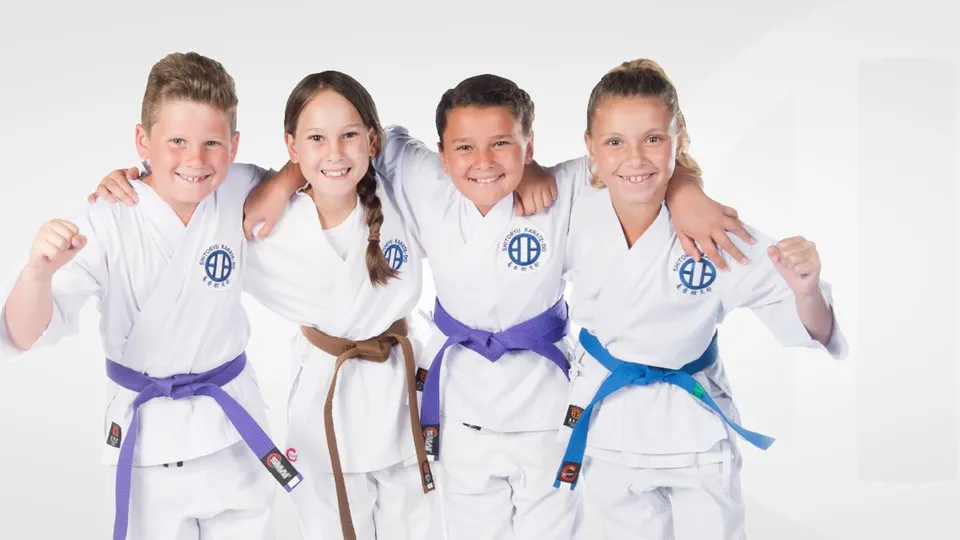
Karate gives children clear, achievable goals. Each coloured belt is earned at a grading, in front of instructors and fellow students, and every one shows a child that practice and effort lead to results. That confidence carries over into the classroom, the sports field and friendships.
2. Focus and concentration
Learning a kata (a set sequence of techniques) means remembering dozens of moves in order, with correct stances, timing and breathing. Short, structured drills train children to listen, watch carefully and stay on task: skills that help with schoolwork too.
3. Discipline and self-control
In the dojo children learn to wait their turn, follow instructions the first time and control their power when working with a partner. Self-control is at the heart of karate: the strongest students are those who never need to use their skills outside the dojo.
4. Respect and good manners
Every class begins and ends with a bow, and students address their instructors as Sensei. Courtesy towards teachers, parents and training partners is part of the training, not an extra.
5. Fitness, coordination and balance
Karate is a full-body workout. Kicks, stances and kata develop strength, flexibility, balance and coordination on both sides of the body, and children are so busy learning that they hardly notice they are exercising.
6. Safety and anti-bullying skills
Children learn practical ways to stay safe: being aware of their surroundings, using a confident voice, walking away from trouble and, only as a last resort, defending themselves. Knowing they can protect themselves makes many children calmer and less likely to be targeted.
7. Friendships and belonging
Training alongside children of different ages builds teamwork and lasting friendships. Senior students help beginners and younger children look up to them. It is a community, not just a class.
What age should my child start karate?
Most children are ready once they can follow simple instructions in a group, usually in early primary school. Children train in our evening community batches or through our school karate programmes, and you can find the nearest venue and time on our weekly timetable. It is never too late to start: many students begin as teenagers or adults.
How to choose a karate school
- Qualified instructors. Ask about the teachers’ grades and who certified them.
- A recognised style and lineage. A traditional style with a clear lineage, such as Shito-Ryu, gives your child a structured syllabus and gradings that mean something.
- Safety first. Look for controlled sparring, protective equipment and classes grouped by age.
- A positive atmosphere. Watch a class: children should be challenged, encouraged and enjoying themselves.
Kassis Karate Academy India is the Indian division of Australia’s Kassis Karate Academy, teaching Shito-Ryu karate in the lineage of the Mabuni family. Get in touch to find a class for your child.